
Guides

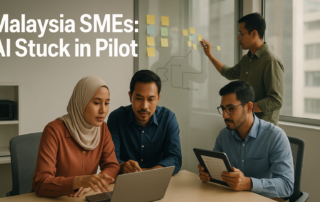
How can Malaysian SMEs move from AI pilots to scaled workflows that improve sales, operations, and margins?

Many Malaysian SMEs run AI pilots but stay stuck with copy-paste work and fragmented systems, so results don’t hold up in day-to-day operations. This guide outlines how to pick P&L-linked use cases, get data and integrations ready, redesign SOPs with control points, train teams by role, and measure ROI with baselines and stop/scale rules.

2026-07-14T18:36:03+08:00

What Should Malaysian Founders Really Worry About in Malaysia’s 2026 Growth Outlook—and How Do You Plan Before Orders Slow?

Malaysia’s 2026 growth outlook can still hide a practical risk for SMEs: external demand shocks that show up first as order delays, slower collections, and inventory drag. This guide outlines early warning signals and planning moves to protect cash flow, tighten working capital, and reduce customer concentration before conditions worsen.

2026-07-06T18:51:31+08:00

How Can Founders Ride Malaysia’s Investment Upcycle in 2026–2027 Without Getting Burned?

Malaysia’s 2026–2027 investment upcycle can create fast growth for founders in manufacturing, supply-chain services, and tech-linked sectors, but it also raises the cost of mistakes in structure, tax, payroll, and contracts. This guide outlines where demand is emerging and how to expand in a way that stays investable, audit-ready, and resilient to volatility.

2026-07-02T19:59:15+08:00

Malaysia’s Tech Rebound: Are Local Businesses Really Ready for the Next Wave in 2027?

Malaysia’s tech rebound is raising customer, vendor, and compliance expectations, but many SMEs still lack the process controls and data hygiene needed to scale automation safely. This article outlines what “readiness” looks like for 2027—covering ROI measurement, cybersecurity basics, and the finance, HR, and entity governance foundations that prevent expensive rework.

2026-07-02T10:01:40+08:00

What Does a New 60,000‑sq‑ft Plant in Penang Signal for Malaysia’s Manufacturing Future?

A new 60,000‑sq‑ft facility in Penang signals faster ramp cycles, tighter supplier integration, and higher documentation expectations across the Kulim–Penang corridor. This article outlines what that shift means for SME vendor readiness, foreign manufacturer setup, hiring constraints, industrial property planning, and audit-ready finance and payroll controls heading into 2027.

2026-06-29T09:57:40+08:00

How Will Malaysia’s 1:3 Internship Policy Change Expat Hiring and Workforce Planning by 2026–2027?

Malaysia’s “1:3 internship policy” is increasingly treated as evidence that employers hiring expatriates are also building a measurable local talent pipeline. This article explains how the expectation can show up in TalentCorp-linked narratives and ESD submissions, and how HR and finance teams can plan headcount, documentation, and budgets for 2026–2027.

2026-06-26T09:31:26+08:00
Go to Top