
What’s in this article
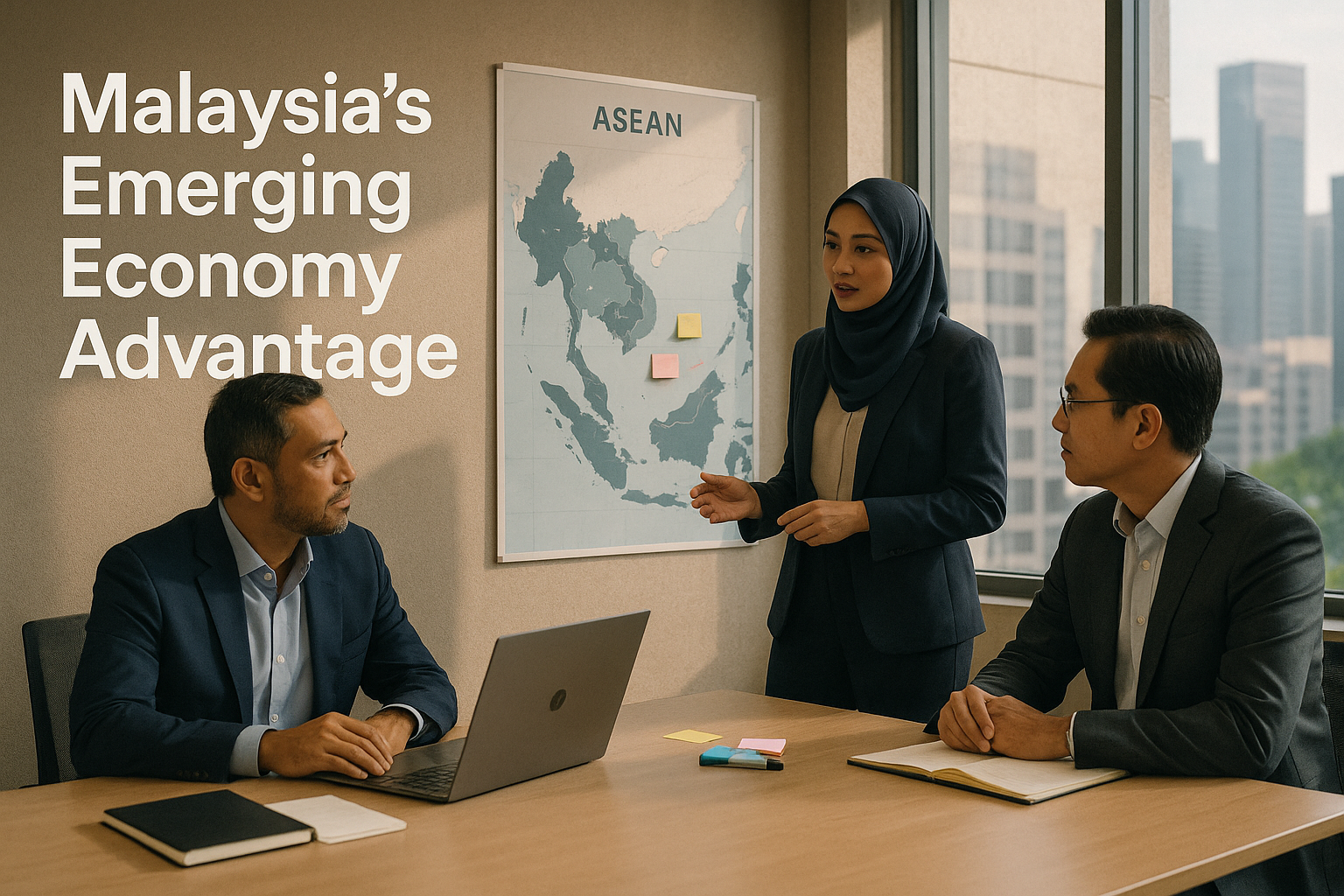
Malaysia’s strong Milken Global Opportunity Index 2026 showing is a timely credibility boost—but for any team positioning itself as a Malaysia investment hub play, it also raises the bar. Foreign investors, regional partners, and ASEAN HQ stakeholders will increasingly expect disciplined reporting, clean unit economics, tight cash control, and a repeatable cross-border operating model—not just good storytelling.
The practical problem for many Malaysia-based founders is that “regional expansion” is often treated as a series of one-off launches. That works until the second market, when governance, forecasting, pricing, hiring, and customer support start to fracture. This guide is an operations playbook to translate the GOI 2026 tailwind into measurable execution commitments for 2027: the operating model, metrics, governance, finance ops, talent plan, and rollout steps that help you scale across Indonesia, Thailand, Vietnam and beyond—without relying on branding alone.
What does the Milken GOI 2026 boost change in practical expectations from investors and HQs?
GOI 2026 is not a due diligence shortcut. It is a conversation opener—a credibility signal that can reduce perceived “country risk” and increase the willingness to take meetings. The operational expectation shift is more important: stakeholders will assume that Malaysia-based teams can operate with regional-grade discipline.
Practically, that means your next investor or regional HQ conversation will drift quickly from “Why Malaysia?” to:
- Can your numbers be trusted month-to-month? (close discipline, reconciliations, consistent definitions)
- Do you know your unit economics by segment and channel? (gross margin, CAC, payback, retention)
- Can you forecast with a clean driver model? (volume, pricing, headcount, collections)
- Can you roll out a new market without reinventing everything? (playbooks, approval rights, vendor onboarding)
- Can you manage cross-border complexity without losing control? (multi-currency, multi-entity, consistent KPIs)
Use GOI 2026 as proof—then back it with commitments
A useful stance for 2027 planning:
- External proof: GOI 2026 supports the thesis that Malaysia can be an effective base.
- Internal proof: your operating cadence, metrics, and governance prove you can execute regionally.
If you can’t show internal proof, the GOI signal can backfire: stakeholders may expect “hub-quality” execution and notice gaps faster.
What is the ‘investor/HQ expectations checklist’ you should be able to pass by end-2026?
Treat this like a readiness gate before you scale headcount or open additional markets. You don’t need perfect systems; you need consistent definitions, repeatable processes, and clear ownership.
1) Reporting cadence and management pack (minimum viable)
By end-2026, aim to produce a monthly management pack within a set number of working days (pick a target and improve). It should include:
- P&L with actual vs budget vs prior month variance commentary
- Balance sheet highlights (cash, payables, receivables, debt)
- Cash runway and short-term liquidity risks
- Revenue by market / product / channel (whichever drives decisions)
- Headcount by function with hiring plan vs actual
- Key operational KPIs (sales pipeline, fulfilment, support, churn)
Control point: One source of truth for KPI definitions. “Active customer” and “gross margin” must mean the same thing every month and in every market.
2) Unit economics clarity (not just topline growth)
Investors and HQ leaders will ask for cohort and contribution-level clarity, especially if you’re expanding.
Minimum set:
- Gross margin by product/service line (and by country when material)
- CAC by channel and payback period (where applicable)
- Retention/churn and expansion (if subscription/contract-based)
- Contribution margin after variable costs (delivery, payment fees, commissions)
Practical rule: If you can’t explain why margins differ between MY and a pilot in another market, you’re not ready to scale that offer.
3) Cash discipline and working capital control
Fast-growing teams fail from cash timing, not only profitability.
Operational must-haves:
- Weekly cash view (inflows/outflows, collections, payroll dates, tax provisions)
- AR aging with named owners for top overdue accounts
- PO/approval controls for spending (especially software, ads, contractors)
- Vendor terms tracked and renegotiated as volume grows
Control point: Make “cash impact” a mandatory field in spend requests above a threshold you set.
4) Forecast hygiene (driver-based, not hope-based)
A credible forecast is one that:
- is built from drivers (leads, conversion, pricing, delivery capacity)
- includes assumptions logged and updated (not overwritten)
- shows downside and base cases
Common failure: sales commits that don’t translate into collections timing. Fix by integrating collection assumptions into the driver model.
5) Governance basics (decision rights you can explain)
Even without a complex board structure, you need clarity on:
- Who can approve hiring by level
- Who can sign vendor contracts and at what limit
- Who can discount pricing and within what guardrails
- Who owns market-entry decisions and partner selection
Investors don’t expect bureaucracy. They expect repeatability and reduced key-person risk.
How do you design a regional operating model that doesn’t break on the second market?
Most expansion pain comes from confusion between central standards and local flexibility. A workable ASEAN model is typically “centralised where it protects control; localised where it protects revenue.”
Step 1: Define what must be standard across countries
Pick a small set of “non-negotiables”:
- Chart of accounts structure and KPI definitions
- Close calendar and management reporting format
- Pricing architecture (how you price; not necessarily the same price)
- Customer onboarding requirements (data fields, credit checks if applicable)
- Contracting guardrails (approved templates/clauses conceptually; keep legal review separate)
- Customer support SLAs and escalation paths
Step 2: Define what can be local
Common localised components:
- Marketing channels and creative
- Sales motions (partners vs direct, enterprise vs SMB)
- Payment methods and collections approach
- Language and customer success scripts
Step 3: Choose an operating pattern (and be explicit)
Typical patterns for Malaysia-based teams:
- Hub-and-spoke: MY HQ owns finance, product, brand; local teams own sales and delivery.
- Country GM model: strong local P&L ownership; HQ sets targets and controls.
- Functional overlay: central functions (finance, HR, compliance, data) support multiple country pods.
Decision test: If you can’t name who owns the customer experience end-to-end in each market, you don’t yet have an operating model.
Step 4: Create the ‘market pod’ blueprint
For each new country, define the minimal pod:
- Country lead (revenue and execution owner)
- Sales / partnerships
- Ops / delivery
- Customer support (local language if needed)
- Finance ops interface (can be central)
Avoid hiring a full mirror of HQ. Start with the smallest team that can execute, with clear HQ support.
Which metrics should you standardise before you expand into Indonesia, Thailand, and Vietnam?
ASEAN expansion fails when each country reports different “success metrics.” Standardise early so you can compare markets fairly and reallocate capital.
A practical ‘ASEAN KPI spine’
Create one KPI spine used across all markets; local teams can add extras.
Commercial (weekly/monthly):
- New bookings / revenue (define: invoiced vs collected)
- Pipeline (stage definitions + conversion rates)
- Average selling price (ASP) and discount rate
- Win rate and sales cycle length
Customer (monthly/quarterly):
- Activation/implementation success rate
- Retention/churn (logo and revenue churn if relevant)
- Net revenue retention (if subscription)
- NPS or service quality proxy (if meaningful)
Unit economics (monthly):
- Gross margin and contribution margin
- CAC and payback (where applicable)
- Cost-to-serve (support tickets per customer, delivery hours)
Cash (weekly/monthly):
- Cash balance and runway
- AR aging and DSO trend (trend is more important than a single number)
- Forecast accuracy (actual vs forecast variance)
Make definitions and data capture a launch requirement
Before you launch a new market, confirm:
- Which system captures the data (CRM, billing, support)
- Mandatory fields (country, segment, channel, cohort month)
- Who validates the data each week
If you have to “clean it later,” you usually won’t—until fundraising, when it’s painful and slow.
How should you set governance and decision rights for a Malaysia-based regional HQ team?
Investors and HQ stakeholders want speed and control. Decision rights are how you get both.
Use a simple RACI and approval matrix
Start with the decisions that cause the most friction:
- Hiring (new headcount, compensation bands, contractor vs employee)
- Spend (software, marketing, agencies, travel)
- Pricing and discounting
- Contract commitments (term length, minimums, penalties)
- Market-entry moves (partners, warehouses, major vendors)
For each, define:
- R (Responsible): who prepares the proposal
- A (Accountable): who makes the decision
- C (Consulted): who must be asked before approval
- I (Informed): who receives updates
Then build an approval matrix with limits (e.g., by amount, contract duration, or risk level).
Practical guardrails that improve speed
- Pre-approved vendor lists and rate cards
- Discount bands with required justification
- Headcount plan approved quarterly; hires within plan move faster
- “Exception process” for urgent cases (documented, time-boxed)
Separate governance from personalities
A common early-stage failure is making approvals depend on one founder’s availability. By 2027, aim for governance that works even when:
- the CEO is travelling
- the CFO is closing month-end
- the country lead is in customer escalations
That’s the operational maturity foreign investors in Malaysia will associate with a real regional HQ.

What finance operations must be upgraded to look ‘investor-ready’—without overbuilding?
You don’t need enterprise ERP to be investor-ready. You do need fast close, clean reconciliations, and consistent reporting.
The minimum finance ops stack (conceptual)
- Accounting system with consistent chart of accounts
- Sales ledger/billing discipline (invoices, credit notes, revenue recognition approach documented)
- Expense management process (capture, approvals, policy)
- Payroll process with clear cut-off dates
- Basic fixed asset and subscription tracking
Close process: build a calendar and owners
Create a close calendar with named owners for:
- Bank reconciliations
- AR/AP reconciliation
- Revenue reconciliation (billing to accounting)
- Deferred revenue or unbilled revenue checks (if applicable)
- Accruals (payroll, bonuses, contractor costs)
Practical target: shorten close time quarter by quarter; don’t wait for a “system upgrade” to improve discipline.
Management reporting: separate ‘accounting close’ from ‘business insights’
Many teams delay reporting until the books are perfect. Instead:
- Produce a management pack on a consistent day
- Clearly label estimates and later true-ups
- Track forecast vs actual variance and learn from it
Budgeting: move to rolling forecasts for expansion
Annual budgets can become irrelevant in volatile expansion cycles. Consider:
- Annual budget for guardrails
- Rolling 3–6 month forecast updated monthly
- Scenario view for new market launches (base/downside)
Multi-entity consolidation (high-level)
If you operate across countries, investors will ask for a consolidated view.
At a high level, prepare for:
- Consistent COA mapping across entities
- Intercompany tracking (who pays for shared services)
- Currency translation approach documented
You do not need to publish consolidated financial statements early; you do need to show you can produce a consistent group view for decision-making.
How do you build an ASEAN expansion playbook that works across Indonesia, Thailand, and Vietnam without pretending they’re the same?
The goal is not to standardise the market. It’s to standardise your internal approach so you can localise fast.
The 6-part market entry playbook (repeatable)
1) Market thesis (2 pages, not 20):
- Target segment and problem
- Why now
- Competitive alternatives (including “do nothing”)
2) Route-to-market choice:
- Direct sales vs channel/partners vs hybrid
- What must be true for each option to work
3) Pricing and packaging localisation:
- Price architecture (tiers, add-ons)
- Local willingness-to-pay assumptions
- Discount guardrails
4) Operating requirements:
- Delivery model (remote vs local)
- Support model (hours, language)
- Vendor dependencies
5) Compliance and people basics (non-legal, operational):
- What data you must capture for payroll/tax reporting flows
- Who owns statutory liaison (finance/HR ops), even if outsourced
6) Launch scorecard (first 90 days):
- Leading indicators (pipeline, activation)
- Lagging indicators (gross margin, churn)
- “Stop / pivot / double down” thresholds
Localisation realities to plan for (ID/TH/VN examples)
Without country-bashing, be explicit that execution differs:
- Indonesia: partner ecosystems can be powerful; collections and payment methods may shape your cash cycle.
- Thailand: relationship-driven enterprise sales may require different sales enablement and local credibility signals.
- Vietnam: fast iteration and strong local competition can pressure pricing and hiring speed.
Use these as planning prompts, not stereotypes. The real discipline is to document assumptions and revise them after market feedback.
Partner management is a control problem
If you expand through partners, build:
- Partner onboarding checklist
- Deal registration rules
- Commission calculation and dispute process
- Performance reviews (quarterly) with clear KPIs
Many “expansion failures” are actually unmanaged partner channels.
How should you plan talent, org design, and regional hiring so execution keeps up with growth?
The most common mismatch is expanding markets faster than you can train managers and maintain quality.
Start with roles that protect control and learning
Before you scale country headcount, invest in:
- A strong finance ops lead (close discipline, reporting cadence)
- A revenue operations capability (CRM hygiene, pipeline definitions)
- A customer success/support lead (SLA, escalation, retention)
- A country launch manager (repeatable rollout and localisation)
Build a ‘manager toolkit’ for new country leads
Country leads fail when they are asked to improvise everything. Provide:
- A standard weekly business review agenda
- Pricing guardrails and discount approvals
- Hiring scorecards and interview rubrics
- Partner evaluation criteria
- Escalation pathways (commercial, ops, customer issues)
Make training part of the operating cadence
Training that isn’t scheduled doesn’t happen. Add:
- Monthly enablement sessions (product, pricing, compliance basics)
- Quarterly playbook updates (what changed, why)
- New hire bootcamps with role-based checklists
Practical workforce planning for 2027
Use a headcount plan that ties roles to drivers:
- Sales hires tied to pipeline coverage targets
- Support hires tied to ticket volume or active customers
- Ops hires tied to delivery capacity and quality KPIs
This is how you avoid “hiring because we’re expanding,” and instead hire because the model demands it.
What operational systems should you prioritise (and what should you delay) for scalable execution?
Systems should follow process clarity. If the workflow is unclear, software will accelerate confusion.
Prioritise these foundations
1) CRM hygiene and pipeline governance
- Mandatory fields and stage definitions
- Weekly pipeline reviews with consistent rules
- Clear handoffs to fulfilment/customer success
2) Billing and collections workflow
- Standard invoice triggers (delivery milestones)
- Collections cadence (who calls, when, what happens next)
- Dispute management and credit note controls
3) Customer support and service delivery
- Ticket taxonomy and SLA
- Escalation process
- Root-cause reviews for recurring issues
4) Procurement and vendor controls
- Purchase request → approval → PO/invoice matching (as appropriate)
- Vendor onboarding and access management
- Renewal calendar for software subscriptions
Delay (or keep lightweight) until you earn complexity
- Heavy custom ERP implementations
- Complex BI dashboards with unclear ownership
- Market-by-market bespoke tools that don’t integrate
If you introduce automation or AI, treat it as an operating change
For AI-enabled support, finance automation, or forecasting tools:
- Redesign the workflow first (who reviews exceptions, who approves)
- Validate data quality (garbage in, garbage out)
- Define security and access controls
- Train staff and measure adoption
- Pilot in one workflow, then scale
A credible investor story is not “we use AI.” It’s “we reduced close time, improved forecast accuracy, and lowered support cost-to-serve—with controls.”
How do you run a cross-border rollout sequence that protects cash, quality, and decision speed?
A good rollout sequence prevents the classic pattern: launch → scramble → churn → cash stress → leadership distraction.
A practical 12-month sequence (adapt to your pace)
Phase 1: Stabilise core (0–90 days)
- Lock KPI definitions and management pack
- Implement weekly cash rhythm and AR ownership
- Document the market entry playbook (v1)
- Clarify approval matrix and discount guardrails
Phase 2: Pilot one market (3–6 months)
- Choose one market with a clear thesis (not the “biggest”)
- Launch with a minimal pod and strong HQ support
- Track the 90-day scorecard weekly
- Run a post-mortem and update playbooks
Phase 3: Scale repeatability (6–12 months)
- Standardise partner onboarding (if relevant)
- Improve close speed and forecast accuracy
- Expand to a second market only when pilot KPIs meet thresholds
Set explicit ‘go/no-go’ thresholds
Before adding the next market, define thresholds such as:
- Forecast variance within an agreed band for 2–3 cycles
- Gross margin stable within target range
- Support SLAs met without heroics
- Collections cycle understood and manageable
This is what “operational readiness” looks like in practice.
Keep Malaysia as the control centre—without bottlenecking
Malaysia-based HQ should own:
- standards, reporting, governance, shared services
But avoid centralising decisions that require local speed:
- tactical pricing within guardrails
- local partner management
- customer escalations (with HQ support)
Balance is what creates a scalable ASEAN operating machine.
Conclusion
The Milken GOI 2026 signal can help Malaysia-based teams open doors—but in 2027, doors will stay open only for operators who can prove execution discipline. Use the ranking as external proof in fundraising and business development, then back it with internal proof: a monthly reporting cadence, clean unit economics, cash and forecast hygiene, clear decision rights, and a repeatable ASEAN market-entry playbook that localises without losing control.
If you want a practical way to start, pick two deliverables for the next 60 days: (1) a management pack with standard KPI definitions and owners, and (2) a written market-entry playbook plus approval matrix that your next country lead can actually run. Paul Hype Page & Co. can support teams as an advisory and implementation partner on finance ops readiness, cross-border operating rhythms, and governance setup—so the Malaysia hub narrative is matched by investor-ready execution.
FAQs
Related Business Articles


Share This Story, Choose Your Platform!