
Guides

How can Malaysia’s convenience store wars teach you to compete profitably on thin margins before cash runs out?

Crowded markets push founders into promo-led growth that can look profitable at gross margin but lose money after fees, shrinkage, labour, rent, and opening costs. This guide shows how to build unit-level P&Ls, set break-even and payback rules, run sensitivities, and decide when to expand, renegotiate, fix the model, or exit before cash runs out.


2026-08-10T18:38:44+08:00

How should Malaysia-based founders build a 12–24 month resilience plan without stalling growth?

Malaysia-based founders and CFOs face a “steady but vulnerable” outlook where variance in demand, FX, and input costs can quickly expose fragile cost bases and concentration risk. This guide shows how to build base/slowdown/shock scenarios with measurable triggers, then apply guardrails for hiring, capex, pricing, working capital, and supplier and customer diversification.

2026-07-28T10:44:26+08:00

Is Malaysia’s real-time payments boom quietly raising your fraud and compliance risk?

Instant rails like DuitNow and real-time transfers reduce settlement time but increase the speed and repeatability of fraud, while banks may apply tighter scrutiny and queries. This playbook shows how SMEs can redesign payee verification, beneficiary-change control, maker-checker approvals, limits, reconciliation cadence, and evidence trails without slowing operations.

2026-07-27T19:59:55+08:00

How can Malaysia-based founders turn the Milken GOI 2026 credibility boost into investor-ready execution for ASEAN expansion?

Malaysia’s Milken GOI 2026 ranking can open doors with investors and regional partners, but it also raises expectations for reporting discipline, unit economics, cash control, and governance. This guide outlines a practical operating model, KPI spine, finance ops upgrades, decision rights, and rollout steps to expand across ASEAN without reinventing execution market by market.

2026-07-23T09:52:40+08:00

How should Malaysian boards treat AI-driven cyberattacks as a financial stability risk—not an IT problem?

AI-enabled cyberattacks can cascade across Malaysia’s payment ecosystem, turning outages and fraud into liquidity, remediation, and data-integrity risks that boards and CFOs ultimately own. This guide explains how to set measurable cyber risk appetite, run payment-linked stress tests, upgrade detection and containment, and align incident playbooks to prove governance without turning it into a tick-box exercise.

2026-07-23T09:25:29+08:00

How do you know when a long-term commitment has become a margin and cash-flow trap for your Malaysian business?

Long-term leases, hire-purchase, vendor contracts, and staffing models can quietly turn into margin and cash-flow traps when unit economics and demand shift. This guide gives Malaysian founders a practical framework to spot trigger signals, model keep vs. renegotiate vs. exit vs. pivot, and execute changes without breaking operations.

2026-07-22T18:37:55+08:00

Has your long-term commitment become a cash-flow leak—and is it time to “shrink to strength” in Malaysia?

Many Malaysia SMEs carry long-term leases, hire-purchase, vendor retainers, and staffing commitments that can turn into margin and cash-flow drains when unit economics shift. This guide shows how to set practical pivot thresholds, quantify runway impact, and choose the right renegotiation, restructuring, sublease/assignment, refinance, or exit path without breaking operations.

2026-07-14T22:20:02+08:00

Is Malaysia’s softer 2026 property market a chance to renegotiate and expand—or a signal to right-size and protect cash flow?

Malaysia’s softer 2026 property market can make lease terms and better locations more negotiable, but it can also pressure demand and cash flow for property-linked sectors. This guide helps founders choose between renegotiating, relocating, expanding, or right-sizing using clear triggers, negotiation levers, and a practical planning sequence for 2027 resilience.

2026-07-14T21:57:31+08:00

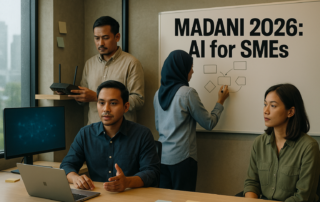
How can Malaysian SMEs turn Belanjawan MADANI 2026’s AI and digital push into a practical 30/60/90‑day implementation plan?

Belanjawan MADANI 2026 raises the bar for Malaysian SMEs to show measurable digital execution, basic cybersecurity hygiene, and clear evidence trails for grants, tenders, and audits. This guide turns those expectations into a practical 30/60/90‑day plan covering finance readiness, workflow documentation, minimum viable AI governance, and a controlled pilot you can measure without overbuying tools.

2026-07-14T20:29:27+08:00

Malaysia is now ranked Southeast Asia’s most attractive investment destination—what does that mean for your business operations in 2027?

Malaysia’s stronger investment-attractiveness signal can bring faster deal cycles, tougher diligence, and higher partner expectations for SMEs. This guide explains what changes operationally and gives a practical 90-day roadmap to become finance-ready, governance-ready, and partnership/M&A-ready.

2026-07-14T19:34:32+08:00
Go to Top