
What’s in this article
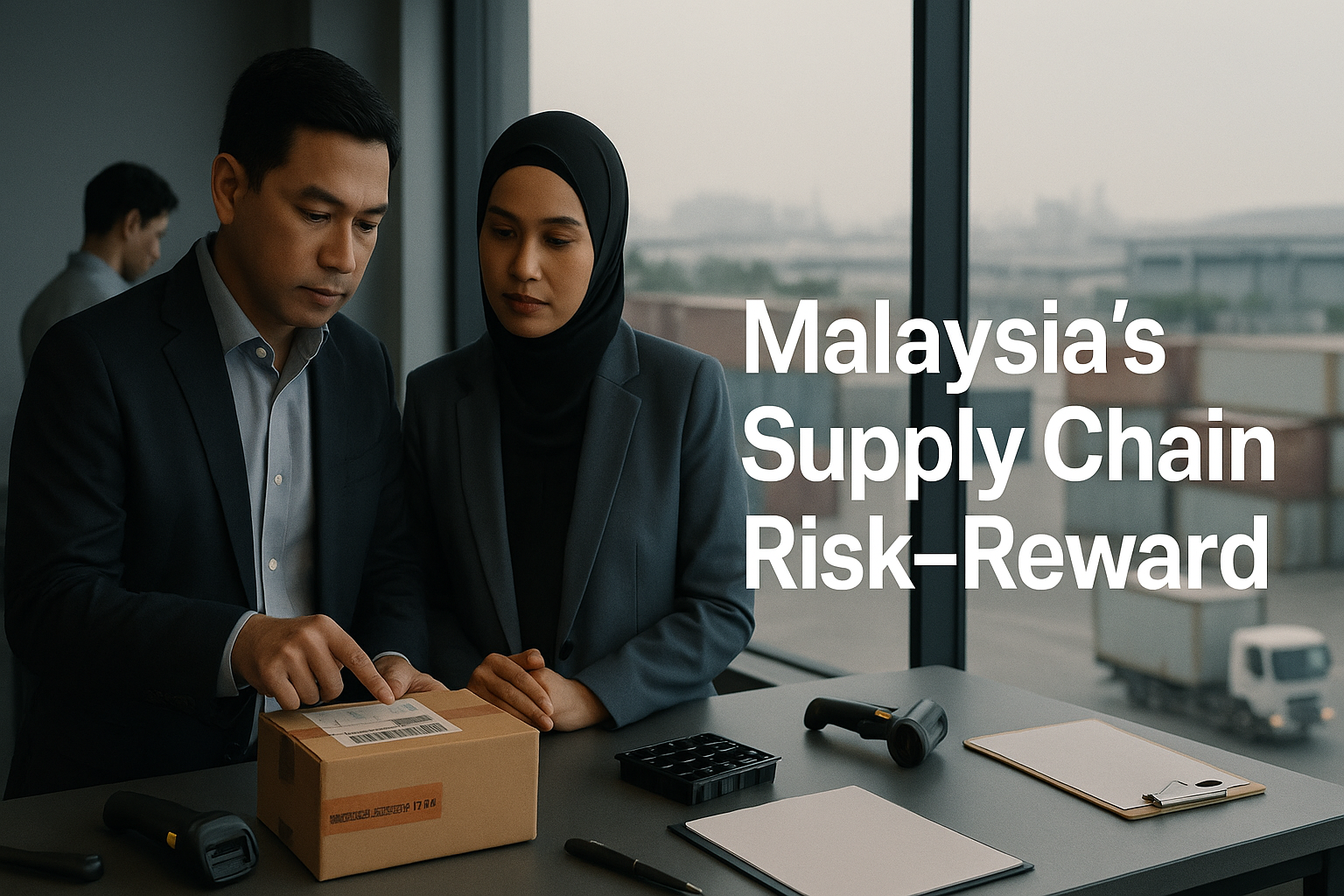
Malaysia export controls and related due-diligence are no longer a niche topic for defence contractors—by late 2026 they are a day-to-day commercial gatekeeper for E&E manufacturers, EMS/contract manufacturers, and logistics players selling into US/EU/Japan-linked supply chains. The US–China rivalry impact on Malaysia shows up less as headline policy and more as friction: slower bank onboarding, tighter trade finance terms, cargo insurance exclusions, and vendor approval questionnaires that your team cannot answer with “Made in Malaysia” alone. This guide is a practical risk-and-controls playbook: what evidence to build, how to trace component origin at BOM level, how to govern routing and forwarders, and how to run “stop-ship” triggers so you stay financeable, insurable, and audit-ready as work re-routes into ASEAN.
Why are banks, insurers, and big-brand customers treating “Malaysia shipments” as higher-risk in 2026–2027?
Malaysia benefits from ASEAN supply chain shift dynamics, but the commercial scrutiny has intensified because global counterparties now evaluate origin, end-use, end-user, and routing as an integrated risk picture.
The practical change: due diligence is moving upstream
For many SMEs, “compliance” used to mean shipping documents were complete and customs clearance worked. In 2026–2027, the gatekeepers that decide whether you can ship at scale are:
- Banks (account opening, credit lines, LC/TR issuance, discounting)
- Insurers (cargo, trade credit, product liability—each has exclusions tied to destination, sanctioned parties, and misrepresentation)
- Global customers and prime contractors (vendor onboarding, annual audits, right-to-audit clauses, flow-down compliance terms)
These parties are not trying to make your life difficult; they are trying to protect themselves from being the “weak link” in a rerouted supply chain.
What triggers extra scrutiny in the Malaysia context
Malaysia’s E&E and EMS ecosystems are commercially exposed to:
- High-tech components that can be considered sensitive depending on specification and end-use
- Mixed-origin bills of materials (BOMs) where some inputs may come from jurisdictions under heightened scrutiny
- Hub-and-spoke logistics patterns (consolidation, re-export, cross-docking) that can look like transshipment if documentation is thin
In practice, the question is no longer “Are you compliant?” but “Can you prove—quickly and consistently—what you shipped, where inputs came from, who it is for, and why the routing makes sense?”
Business consequence
If you cannot produce evidence on demand, outcomes can include:
- delayed or failed bank onboarding
- trade finance issued with tighter conditions or not issued at all
- cargo insurance bound with carve-outs (or claims challenged) due to incomplete declarations
- loss of higher-margin customers who require audit-ready shipment files
This is why controls and documentation are now a revenue enabler, not a back-office formality.
What are the real “block points” that stop Malaysian SMEs from scaling US/EU/Japan-linked orders?
Most growth plans assume capacity and pricing are the constraints. In cross-border work linked to US/EU/Japan supply chains, approvability and financeability are often the true constraints.
Block point 1: Bank onboarding and periodic reviews
Banks typically assess:
- your customer and supplier profile (counterparty risk)
- countries touched (ship-from, ship-to, transit points)
- whether your products have dual-use sensitivity or are frequently used in controlled applications
- your internal controls (who checks what, how you screen, what you retain)
A common failure mode: a sales-driven business cannot explain its supply chain beyond “we buy from X and ship to Y.” That may be enough operationally, but it is not enough for a risk function.
Block point 2: Trade finance (LC/TR) and documentary discipline
Trade finance lives and dies on documents. Issues that create delays or refusals:
- inconsistent product descriptions across PO / invoice / packing list
- last-minute amendments to consignee or notify party
- unclear Incoterms responsibilities (who insures, who controls routing)
- missing or low-quality origin evidence when questioned
Block point 3: Cargo insurance underwriting and claims defensibility
Underwriters will care about:
- routing transparency and any high-risk transshipment points
- whether goods are misdeclared (even unintentionally) in description or classification
- whether counterparties create sanctions or restricted-party exposure
Poor documentation is not only an operational issue; it can become a claims issue.
Block point 4: Customer/vendor approval and audit trails
Large brands increasingly require:
- written trade compliance policies
- restricted party screening procedures
- escalation rules and “stop-ship” authority
- training records and management sign-off
- shipment file retention and audit access
If you cannot meet these, you may never get onto the approved vendor list—or you may be removed quietly after a review.
What to do with this insight
Map your expansion plan to these block points early. Treat them as workstreams with owners, not as “documents operations will handle later.”
What does “origin and component tracing” mean in practice for Malaysia’s E&E and contract manufacturing firms?
For many Malaysia-based manufacturers, the commercial reality is mixed-origin manufacturing: boards, ICs, sensors, connectors, chemicals, and sub-assemblies sourced across Asia, assembled or programmed in Malaysia, then shipped to customers who must defend their own compliance positions.
Your goal is not to become a trade lawyer. Your goal is to build BOM-level visibility and evidence that withstands questions from banks, insurers, and customer audit teams.
Start with two different “origin questions” you will be asked
- Where did the inputs come from? (component origin)
- What is the country of origin of the finished good? (product origin for commercial and customer purposes)
Even when the finished good is legitimately Malaysian-origin for business purposes, counterparties may still ask for input origin and supplier declarations—especially for sensitive product categories.
Minimum evidence set for component origin tracing
For each key component group (not necessarily every screw), build a file that can be produced within 24–48 hours:
- Approved supplier list (ASL) with legal names, registration numbers where available, and addresses
- supplier declarations / statements on origin where relevant (keep the version and validity period)
- purchase orders and invoices that tie the component to a shipment batch or production lot
- internal BOM and revision history (what changed, when, who approved)
- lot/serial traceability for higher-risk components (ICs, RF modules, encryption-capable items, industrial controls)
Practical risk-based approach (so SMEs don’t drown)
You do not need the same depth for everything. Prioritise:
- components that are high-value or spec-sensitive
- components that could be viewed as dual-use depending on specs
- components sourced via brokers or non-franchised channels
- components with unusual routing (e.g., bought in one country, invoiced from another, shipped from a third)
Common “origin story” failures that create suspicion
- “Made in Malaysia” label with no supporting production records or supplier evidence
- sudden supplier changes with no due diligence trail
- inability to show that the Malaysia facility performed meaningful operations (from a commercial proof perspective)
The win is straightforward: when questioned, you can show a coherent, dated, internally approved evidence trail that matches your documents and operations.
How do you reduce transshipment suspicion without slowing operations to a crawl?
Transshipment risk is less about what you did and more about what your file can prove. Malaysia’s role as a regional hub means legitimate routing patterns can look suspicious if they are not documented clearly.
Build “routing transparency” into the shipment workflow
Create a standard shipment file (digital is fine) that includes:
- customer PO and your sales order
- commercial invoice and packing list (consistent description)
- airway bill / bill of lading
- export/ship-out documents used in your normal process
- Incoterms confirmation (who controls freight, who insures, who selects forwarder)
- forwarder booking confirmation and routing
- any origin-related documents used for customer/bank purposes (where applicable)
The point is not paperwork for its own sake. The point is to make it easy to answer: What moved, from where, to whom, by which route, and why?
Governance for freight forwarders (often the hidden weak link)
Treat forwarders as risk-bearing partners:
- onboard forwarders with basic due diligence (company identity, reputation, operating footprint)
- require named points of contact and escalation paths
- set rules for no routing changes or consignee changes without written approval
- periodically sample-check forwarder documents for consistency
Incoterms clarity as a control, not a sales detail
Misunderstood Incoterms create disputes over:
- who had responsibility for transport and insurance
- who instructed the forwarder
- who approved rerouting
That dispute becomes toxic when a shipment is held. Make Incoterms selection a controlled decision with sign-off, not a default copied from old templates.
The “audit-ready shipment file” standard
Aim for a file that a bank officer or customer auditor can read without needing your ops team to explain context. If the file requires oral explanations, it will fail under pressure.
A practical KPI: 95% of shipments have complete files within 5 working days of shipment (or sooner if your cycle is faster).
What red flags should trigger a “stop-ship” decision for Malaysia hub operations?
A stop-ship trigger is not about being overly conservative; it is about preventing a small anomaly from becoming a frozen shipment, a financing dispute, or a terminated customer relationship.
Build a stop-ship list that operations can actually use
Keep it short, specific, and tied to escalation owners.
Counterparty and payment red flags
- customer asks to change consignee/notify party after documents are prepared
- payment instructions involve unrelated third parties without a clear explanation
- unusual intermediaries appear (new agent, new “procurement office”) with limited footprint
Product and documentation red flags
- product description on PO differs materially from your invoice/packing list
- HS classification or description is changed late “to make clearance easier”
- customer requests vague descriptions (“electronics parts”) for specific controlled-performance items
Routing and destination red flags
- routing includes unexpected high-risk transshipment points not consistent with cost/time logic
- destination is inconsistent with the customer’s stated business (e.g., industrial control equipment shipped to a trading entity with no operating site)
Sourcing red flags (common in E&E)
- sourcing from brokers with weak traceability for sensitive components
- sudden substitution of components that materially change performance (e.g., RF, encryption-capable, high-end compute)
Define escalation rules (who decides, and how fast)
A workable model for SMEs:
- Ops can pause shipment for up to a defined window (e.g., same day)
- Compliance owner / finance controller reviews within 24 hours
- Director sign-off required for high-risk outcomes (reroute, change consignee, ship to unusual end-user)
Document the decision
When you decide to proceed or stop, record:
- what was flagged
- what was checked
- who approved
- what evidence was relied on
This is valuable later when banks or customers ask, “What controls do you have, and do you use them?”

How should Malaysian companies prepare for vendor approval and customer audits without building a bureaucracy?
Big-brand vendor approval is increasingly a capability test. The question is not “Do you have a policy PDF?” but “Can you consistently execute controls and show evidence?”
Minimum trade-compliance literacy your team needs
You do not need a large compliance department, but you do need baseline competence across sales, operations, and finance:
- understanding of why end-user/end-use questions matter
- ability to recognise red flags and escalate
- discipline in document consistency and recordkeeping
- understanding that “we’ve always done it this way” is not a defence when scrutiny increases
A lean vendor-audit pack (build once, refresh quarterly)
Prepare a folder that includes:
- trade compliance policy (plain English; scope, roles, escalation)
- restricted party screening procedure (what tools or checks you use; how you record results)
- supplier onboarding and review procedure
- shipment file checklist and retention standard
- training log and attendance
- management sign-off and periodic review notes
Demonstrate controls with evidence, not statements
Auditors and customer risk teams respond well to:
- a few anonymised sample shipment files that are complete and consistent
- logs that show screenings were done before shipment release
- examples of escalations where you paused and resolved an issue
Align incentives: sales vs controls
A common failure: sales commits to ship dates and terms before operations and finance confirm feasibility under controls.
Practical fix:
- require a pre-acceptance check for higher-risk destinations/customers
- define which deals require compliance owner review before confirming delivery dates
Where Paul Hype Page & Co. fits (when needed)
Some SMEs use Paul Hype Page & Co. as an implementation partner to:
- translate customer questionnaires into workable internal controls
- standardise documentation and retention workflows
- prepare management-ready evidence packs for banks and key customers
The objective is operational readiness, not paperwork volume.
How do bank onboarding and trade finance decisions change when origin and routing risk increases?
Banks are not evaluating you only as a borrower; they are evaluating your transactions as potential risk events.
What banks typically want to see (commercially)
Expect questions in these areas:
- business model clarity: what you make/move, typical customers, typical routes
- counterparty controls: how you select and monitor customers and suppliers
- documentary discipline: ability to produce consistent shipment evidence
- exception handling: what happens when something looks off
If you are in E&E/EMS or logistics, be ready to explain:
- how you prevent being used for suspicious transshipment
- how you manage sensitive components and substitutions
Trade finance is a “documents-first” product
For LCs and similar instruments, small inconsistencies become big delays. Operationally, you want:
- standard templates for invoices and packing lists
- a single source of truth for product descriptions
- a maker-checker process for document preparation
- pre-checks before presenting documents to the bank
Build a “bank-ready transaction narrative” for key trade lanes
For your top 3 lanes (e.g., MY → JP, MY → EU, MY → US-linked intermediaries), prepare a short internal narrative:
- typical goods and use-case
- typical buyers and industries
- typical routing and forwarders
- typical documentation set
- your control points and escalation
This speeds onboarding and reduces the number of follow-up requests.
Don’t ignore periodic reviews
Many SMEs pass onboarding and then degrade. Controls must be maintained so that a later review doesn’t result in reduced facilities or risk re-rating.
A simple discipline: quarterly internal sampling of shipments and supplier/customer files, with director-level review of findings.
How can cargo insurance and trade credit outcomes be improved through better controls (not just better premiums)?
Insurance outcomes improve when underwriters trust your disclosures and your ability to manage exceptions.
Underwriters care about two things you can control
- Misrepresentation risk (even accidental): Are descriptions, values, and routes consistent?
- Loss prevention: Are packing, handling, and logistics partners managed, and are incidents investigated?
Practical steps that reduce underwriting friction
- use consistent product naming conventions (avoid overly generic descriptions)
- maintain a forwarder performance and incident log
- document how you handle rerouting and consignee changes
- keep evidence that higher-risk shipments received additional checks
Claims defensibility is built before the shipment leaves
When a shipment is questioned or delayed, your ability to produce:
- the shipment file
- the decision log
- correspondence showing timely disclosure and approvals
…can materially change how smoothly the situation resolves.
Trade credit and customer concentration
If you use trade credit insurance or rely on receivables finance, expect deeper review of:
- who your buyers are and how stable they are
- how you prevent shipping to questionable end-users through intermediaries
Controls that show you know your counterparties—and can prove it—support better continuity of cover.
What governance upgrades should SME directors in Malaysia put in place to stay vendor-approvable and financeable?
Governance is where “controls” stop being a checklist and become a management system. For SMEs, the right governance is lean, accountable, and reviewable.
Assign clear ownership (avoid the “everyone is responsible” trap)
At minimum define:
- Process Owner (Operations): shipment file completeness, forwarder governance
- Control Owner (Finance/Compliance): screening logs, exception approvals, bank/customer responses
- Director Sponsor: policy approval, risk appetite, decision on high-risk exceptions
Write policies that match reality
A 3–5 page policy that people follow beats a 40-page policy that no one reads. Include:
- scope (which products, which business units, which trade lanes)
- roles and approval limits
- stop-ship triggers
- record retention standard
- incident response steps
Implement periodic checks that don’t disrupt operations
A workable cadence:
- monthly: sample 5–10 shipments for file completeness and document consistency
- quarterly: review top suppliers and any new brokers; check declarations and traceability
- semi-annually: tabletop exercise—simulate a held shipment and test response time and evidence availability
Management sign-off matters more than perfect paperwork
Vendor auditors and banks look for evidence that leadership takes accountability. Keep short meeting notes:
- what was reviewed
- what issues were found
- what corrective actions were assigned
- due dates and closure
This is often the difference between “you have documents” and “you have a control environment.”
How do you implement these controls without overloading teams or breaking delivery performance?
The fastest way to fail is to bolt on controls as extra work with no workflow redesign. The goal is to embed checks into existing steps.
Step 1: Map your current “quote-to-cash-to-ship” workflow
Identify where decisions already happen:
- customer onboarding
- quotation and order acceptance
- procurement and component substitution
- production release
- shipment booking
- document preparation
- invoice and collections
Controls should sit at these natural decision points.
Step 2: Create a tiered risk model
Not every shipment needs the same friction. A simple 3-tier model:
- Tier 1 (low risk): repeat customer, standard route, low sensitivity goods → standard shipment file
- Tier 2 (medium risk): new customer or new route or higher-value → additional screening + manager sign-off
- Tier 3 (high risk): unusual intermediaries, sensitive components, rerouting/consignee changes → stop-ship until director approval
Step 3: Standardise data and templates
Most delays come from inconsistent data. Fix this with:
- a controlled product description library (sales/ops/finance aligned)
- standard invoice and packing list templates
- a single location for supplier declarations and version control
Step 4: Build a “shipment file by default” habit
Make the shipment file the output of the process, not an afterthought.
- create a checklist in your ERP/share drive
- require completion before shipping release (or within a defined post-ship window)
- audit completion rates monthly
Step 5: Train for decisions, not theory
Short training works best when it is scenario-based:
- last-minute consignee change
- broker offers faster components with limited traceability
- customer asks for vague descriptions
- forwarder proposes a new route
Step 6: Measure what matters
Operational KPIs to track:
- shipment file completeness rate
- average time to answer a bank/customer query
- number of stop-ship events and closure time
- percentage of suppliers with up-to-date declarations (for prioritised components)
This turns “compliance” into operational performance.
Tooling note (keep it simple)
Many SMEs can implement 80% of this with disciplined folders, templates, and logs. If you add software, ensure:
- ownership is clear
- data fields are standardised
- the tool integrates with how documents are produced
- there is a realistic adoption plan
Technology should reduce friction, not create a second system people bypass.
Conclusion
Malaysia’s opportunity from supply chain re-routing is real—but in 2026–2027 the limiting factor for many exporters, manufacturers, and logistics firms is not demand. It is whether you can pass the practical gatekeepers: bank onboarding, trade finance documentation checks, cargo insurance underwriting, and big-brand vendor approvals. The upgrade path is clear and manageable for SMEs: build BOM-level component origin visibility for priority inputs, tighten transshipment and routing transparency through forwarder governance and audit-ready shipment files, implement a short stop-ship trigger list with director-backed escalation, and run periodic internal sampling so your controls stay alive. If you treat these as operational controls with evidence—not slogans—you improve your odds of staying financeable, insurable, and approvable as US/EU/Japan-linked work expands through Malaysia.
FAQs
Make an audit-ready shipment file the default output of each shipment (PO, invoice, packing list, AWB/BL, Incoterms, forwarder booking/routing, and any origin documents) and standardise descriptions and templates so documents stay consistent.
Because counterparties now assess origin, end-use/end-user, and routing together, and Malaysia hub-and-spoke logistics plus mixed-origin BOMs can resemble transshipment risk if evidence is thin.
Flag late consignee/notify-party changes, vague or mismatched product descriptions, last-minute HS/description changes, unexplained third-party payments, unusual routing, and broker-sourced sensitive components with weak traceability—then escalate to a defined owner within 24 hours.
Maintain an approved supplier list, supplier declarations where relevant, POs and invoices tied to lots/batches, BOM and revision history, and lot/serial traceability for higher-risk parts such as ICs and RF modules.
Use a lean audit pack (policy, screening procedure, shipment checklist, training log, management sign-off), implement a simple tiered risk model for shipments, and run monthly/quarterly sampling so controls stay current for periodic reviews.
Related Business Articles


Share This Story, Choose Your Platform!