
What’s in this article
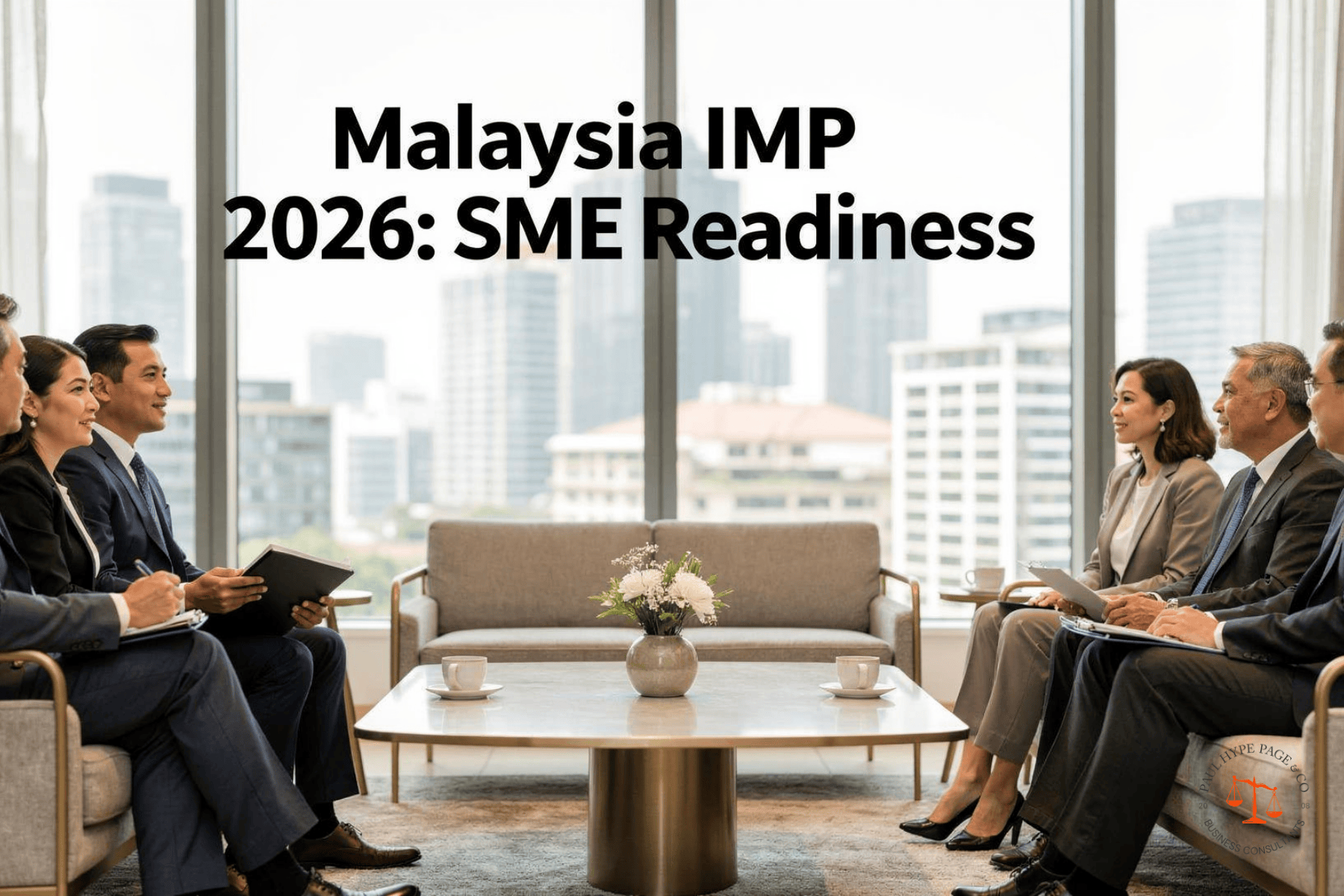
Malaysia’s macro narrative matters to SME execution. The Malaysia IMF Article IV 2026 assessment frames expectations on growth, inflation, fiscal consolidation, subsidy rationalisation, and reform pace—factors that can quickly flow into interest rates, credit committees, hiring costs, and compliance scrutiny. For founders and finance managers planning an entry or expansion in 2026 (and budgeting into 2027), these signals help answer practical questions: Should you accelerate Malaysia company incorporation to secure contracts and hire early, or wait for clearer demand? Which banks are likely to be conservative on Malaysia corporate bank account approvals? How should you forecast Malaysia payroll EPF SOCSO costs when wage pressure and compliance checks rise? And for groups using mutual recognition arrangements (MRA) to structure cross-border operations, when does it make sense to expand? PHP supports end-to-end setup—incorporation, corporate secretarial, accounting, tax, payroll, and audit readiness—so macro signals translate into operational decisions, not just headlines.
What is the Malaysia IMF Article IV 2026, and why should an SME treat it as an operating signal (not just economics)?
The IMF’s Article IV consultation is a periodic, structured review of a country’s macroeconomic conditions and policy direction. For SMEs, it is most useful as a practical “scenario framework” because it tends to focus on:
- Growth drivers and downside risks (demand, exports, domestic consumption)
- Inflation and cost pressures (food, services, administered prices)
- Fiscal policy direction (tax base broadening, subsidy rationalisation, consolidation pace)
- Financial sector conditions (credit growth, asset quality, funding costs)
- Structural reforms (productivity, governance, labour market, digitalisation)
Why this matters for execution in Malaysia:
- Bank appetite and onboarding scrutiny tends to tighten when macro risk narratives rise.
- Hiring budgets can swing when wage inflation, levy changes, or compliance enforcement ramps up.
- Incorporation timing affects your ability to bid for contracts, hire legally, and invoice in-ringgit.
- Cross-border structuring becomes more sensitive as authorities focus on substance, transfer pricing, and beneficial ownership transparency.
In short: the Malaysia IMF Article IV 2026 is not a rulebook, but it often foreshadows the direction of travel. SMEs can use it to plan timing, cash buffers, and compliance readiness for 2026–2027.
How can the 2026 macro outlook affect Malaysia company incorporation timing and entity choice?
In practice, macro conditions affect “time-to-revenue” and “time-to-compliance.” When growth is expected to be steady but reform and cost pressures are rising, SMEs often benefit from earlier setup to avoid bottlenecks.
Key timing impacts for Malaysia company incorporation:
- Vendor onboarding: Many Malaysian corporates and MNCs require a local entity, local bank account, and compliant statutory documents before awarding work.
- Hiring lead time: You cannot run proper Malaysia payroll EPF SOCSO without the necessary employer registrations and internal controls.
- Banking queues: When banks tighten KYC (common during risk-off periods), the incorporation-to-bank-account cycle lengthens.
Entity choice implications (typical options):
- Sdn. Bhd. (private limited company): Common for operating businesses hiring staff and contracting locally.
- Branch office: Sometimes used by foreign companies, but may face different tax/compliance considerations and client perceptions.
- Representative office: Usually limited to non-revenue activities (market research/liaison), which can delay monetisation.
Example: A Singapore-based services SME plans to sign a 12-month Malaysian contract in Q3 2026. If the client requires a local invoice, local bank payments, and payroll for onsite staff, delaying incorporation until contract signature can push operational readiness into Q4—risking missed milestones.
Where PHP fits naturally: PHP teams typically help founders decide whether an operating Sdn. Bhd. is needed immediately, or whether a staged approach (e.g., rep office to Sdn. Bhd.) is more practical—while ensuring accounting, tax registration, and corporate secretarial compliance is ready from Day 1.
What does the IMF-style focus on inflation and subsidy reform mean for Malaysia payroll EPF SOCSO budgeting in 2026–2027?
When inflation is sticky or subsidy rationalisation is underway, SMEs often experience cost pressures beyond base salary.
For Malaysia payroll EPF SOCSO planning, build budgets around:
- Total employment cost (TEC), not just gross salary
- Mandatory contributions and reporting processes
- Allowances and reimbursements that can trigger payroll treatment questions
- Overtime and shift patterns (especially in retail, logistics, manufacturing)
Practical budgeting steps (2026–2027):
- Model three salary scenarios
- Base case: planned salary bands
- Tight labour market: 5–10% higher offer pressure in critical roles
- Retention case: mid-year adjustments and variable bonuses
- Include statutory employer costs
- EPF and SOCSO are core components of Malaysia payroll EPF SOCSO compliance.
- Rates and categories depend on employee profile; treat the employer portion as a fixed “tax-like” cost line.
- Plan for compliance administration
- Monthly processing, reconciliations, and submissions
- Payroll audit trail: payslips, employment contracts, leave records
Common mistake: SMEs sometimes hire contractors to “avoid payroll,” then later discover the operational reality looks like employment (fixed hours, direct supervision, company tools). This can create backdated payroll correction work and reputational risk.
Operational tip: Before hiring, create a payroll policy pack (salary structure, allowances, claims, cut-off dates, approval workflow). PHP often helps clients set up payroll processes aligned with Malaysian practice, and integrates payroll with accounting so your wage costs reconcile cleanly for management reporting and audit readiness.
How do interest rates and credit conditions influence Malaysia corporate bank account opening in 2026?
Even if your business is healthy, Malaysia corporate bank account onboarding can be affected by broader risk sentiment. When financial institutions anticipate slower growth or higher default risk, they may tighten:
- Beneficial ownership checks
- Source-of-funds and source-of-wealth evidence
- Customer due diligence for cross-border revenue flows
- Ongoing transaction monitoring thresholds
What SMEs can do to reduce delays:
- Prepare a clear business narrative: what you sell, to whom, and why Malaysia
- Document contracts or near-term pipeline (LOIs, proposals, invoices)
- Map expected transaction flows (countries, currencies, monthly volumes)
- Provide an org chart showing ultimate beneficial owners (UBOs)
- Ensure your Malaysia company incorporation documents are consistent across all forms
Common mistakes that trigger follow-up questions:
- Mismatch between stated business activity and actual payments
- Overly broad business description (“trading”, “consulting”) without specifics
- No local address support or unclear operating substance
- Complex structures with no explanation of commercial rationale
Example: A foreign founder opens a Malaysian entity for regional billing but cannot explain why collections cannot be done in their home jurisdiction. Banks may ask for contract terms, tax rationale, and proof of local operations.
How PHP can help (subtly): PHP commonly supports clients by aligning incorporation records, shareholder/director documentation, and accounting setup to the bank’s expected KYC logic—so the application is coherent, not piecemeal.
What is a realistic 2026 checklist for incorporating, banking, and payroll so you can hire and invoice on time?
A practical way to treat the Malaysia IMF Article IV 2026 outlook is to assume more scrutiny and longer lead times, even if growth is steady.
A 2026-ready checklist:
Before incorporation (2–4 weeks planning)
- Confirm business activities and licensing implications (if any)
- Decide shareholding and director composition
- Draft a simple 12-month Malaysia operating model: headcount, revenue, costs
- Plan intercompany arrangements if part of a group (service fees, IP use, management charges)
Incorporation phase
- Align company name, business description, and paid-up capital intent with actual needs
- Prepare UBO documentation and corporate charts early
- Put in place corporate secretarial calendars (annual return, resolutions, registers)
Post-incorporation execution (first 30–60 days)
- Malaysia corporate bank account application pack (narrative + transaction map)
- Accounting system setup (chart of accounts, invoice templates, approval limits)
- Malaysia payroll EPF SOCSO employer registration and payroll workflow
- Basic internal controls: maker-checker for payments, claims policy, expense categories
Common sequencing mistake: Some SMEs sign employment offers before confirming payroll registration and bank account readiness. This can force manual payments, delays in statutory submissions, and messy reconciliations.
PHP’s role in execution: PHP often coordinates these steps as a single project—company incorporation, corporate secretarial, payroll setup, and accounting—so your operational go-live date is credible.

How should SMEs read “reform and revenue mobilisation” signals when building a Malaysia SME investment outlook for 2027?
IMF assessments often emphasise medium-term fiscal sustainability—usually pointing to broader tax bases, improved compliance, and targeted subsidies. Even when no single measure is confirmed, SMEs should plan for a compliance environment that becomes more data-driven.
What this can mean for Malaysia SME investment outlook:
- Greater documentation expectations (invoices, contracts, expense substantiation)
- More attention to related-party pricing and economic substance
- Increased audit readiness needs as businesses scale
Practical planning moves
- Keep management accounts monthly from the start (not “catch up” quarterly)
- Separate personal and corporate spending strictly
- Document intercompany arrangements contemporaneously
- Maintain clean HR records (contracts, leave, claims, performance bonuses)
Example: A foreign-owned Malaysian Sdn. Bhd. charges a “management fee” to the parent without a written service scope, timesheets, or deliverables. During a tax review, this can be challenged as non-deductible or incorrectly priced.
Where PHP fits: PHP supports clients with bookkeeping, tax compliance, and audit-ready documentation. The goal is not perfection on Day 1, but a consistent system that can withstand questions as the business grows into 2027.
What are the common incorporation and payroll mistakes SMEs make in Malaysia during uncertain macro periods?
Macro uncertainty typically increases the cost of mistakes because corrections take longer (and counterparties are less flexible).
Top mistakes to avoid:
Incorporation and structuring
- Incorporating without a clear business activity description and then changing it repeatedly for banking
- Using nominee-like arrangements without understanding beneficial ownership transparency requirements
- Underestimating the ongoing corporate secretarial workload (resolutions, registers, filings)
Banking and cash management
- Applying to multiple banks with inconsistent information
- Not preparing evidence of source of funds for initial capital injection
- Assuming a foreign director can always attend bank meetings on short notice
Payroll and HR operations
- Treating allowances inconsistently (some through payroll, some as cash reimbursements)
- No written leave and claims policy
- Hiring “contractors” who operate like employees
Corrective-cost example: If payroll is processed informally for six months and then migrated to a proper system, you may face reconciliation issues, amended submissions, and employee trust issues.
How PHP can support: PHP’s value is often in preventing these failure modes—setting up compliance calendars, payroll governance, and accounting structures that scale without constant rework.
How does Malaysia MRA expansion timing affect foreign groups planning cross-border structures in 2026–2027?
For some sectors and professional services, MRAs (mutual recognition arrangements) can influence how groups deploy talent, sign regulated work, and structure service delivery across borders. The keyword topic “Malaysia MRA expansion timing” matters because expansion or broader recognition (if announced or negotiated) can change whether you:
- Need a fully licensed local team immediately
- Can rely on cross-border professional recognition (partially) while building local capability
- Should structure as a cost centre first, then convert to a revenue entity once recognition pathways clarify
Important caution: MRAs are sector-specific and can change through negotiations, regulator guidance, or implementation details. If you are unsure whether your profession/service is covered, treat it as a planning assumption, not a guarantee.
Practical structuring approach
- Build a “two-layer plan”: (1) legal entity readiness; (2) licensing/recognition readiness
- Avoid contracts that require regulated sign-off until the pathway is confirmed
- Document who performs which services (Malaysia vs offshore) for tax and compliance clarity
Where PHP can help: For foreign groups, PHP typically coordinates corporate structuring, compliance, and (where relevant) work authorisation strategy so cross-border operations are practical and defensible.
What should Singapore-linked and foreign founders plan for if they want to hire in Malaysia while keeping regional mobility?
Many Malaysia market-entry plans involve a Singapore HQ with Malaysian operations. The operational reality is that hiring and cross-border mobility affect cost, compliance, and speed.
Key planning points:
- Decide which roles must be Malaysia-based versus regional
- Set compensation with clear components (base, allowances, variable pay)
- Create intercompany billing logic early (who bears salary cost, who invoices clients)
Work authorisation (high-level)
If you plan to relocate staff, you typically need a work authorisation strategy aligned to role seniority and duration. Requirements and categories can change, and processing times can vary.
A common mistake: Entering Malaysia on short-term visit passes to “start work” before the entity, payroll, and authorisations are aligned. This can create immigration and reputational risks.
How PHP supports: PHP’s regional footprint helps founders coordinate entity setup, payroll readiness, and cross-border mobility planning so hiring timelines match commercial commitments.
How can SMEs turn the Malaysia IMF Article IV 2026 narrative into a practical 90-day action plan?
Treat the Malaysia IMF Article IV 2026 as a trigger to tighten execution discipline. A simple 90-day plan reduces delays and avoids avoidable compliance issues.
Days 1–30: Decide and design
- Confirm whether you need an operating Sdn. Bhd. now
- Finalise shareholders, directors, and UBO documentation
- Draft a one-page Malaysia business plan (customers, pricing, hiring, transaction flows)
Days 31–60: Build the operating backbone
- Start Malaysia corporate bank account application with a consistent narrative pack
- Implement accounting processes (invoicing, expenses, approvals)
- Register and configure Malaysia payroll EPF SOCSO workflows
Days 61–90: Prove substance and readiness
- Run a “mock month-end close” to confirm payroll-to-accounts reconciliation
- Compile a compliance folder: contracts, invoices, board resolutions, policies
- Stress-test cashflow under slower collections or higher payroll costs
A simple KPI set to monitor
- Days to open bank account
- Time from offer to first payroll run
- Month-end close completion time
- Variance between budgeted and actual employment cost
PHP involvement (light-touch): Even when clients manage day-to-day operations internally, PHP can act as the project backbone—coordinating incorporation, corporate secretarial, payroll, and accounting so your Malaysia launch does not depend on ad hoc fixes.
Conclusion
The Malaysia IMF Article IV 2026 outlook is most useful to SMEs as a planning lens: expect tighter scrutiny, greater emphasis on documentation, and more sensitivity to wage and financing costs as Malaysia continues reforms into 2027. If you align Malaysia company incorporation timing with contracting and hiring needs, prepare a coherent Malaysia corporate bank account narrative, and budget Malaysia payroll EPF SOCSO as a full employment-cost system (not a monthly afterthought), you reduce execution risk. For foreign groups, treat Malaysia MRA expansion timing as a scenario input—build a structure that works today, with options to expand once recognition pathways and commercial demand are clearer. If you are planning a 2026–2027 setup and want clarity on structuring, compliance sequencing, and operational readiness, speaking with an experienced regional advisor early can prevent delays and costly rework—Paul Hype Page & Co. can support across incorporation, corporate secretarial, accounting, tax, and payroll as your Malaysia operations scale.
FAQs
Hiring or issuing start dates before payroll registrations and bank account readiness are in place, which can lead to manual payments, late statutory submissions, and reconciliation clean-up.
Model total employment cost by including employer EPF and SOCSO, expected allowances/bonuses, and the admin work needed for compliant monthly processing and recordkeeping.
A concise business overview, expected transaction flows, contracts/LOIs or pipeline evidence, UBO org chart, and consistent incorporation details (business activity, directors, shareholders, addresses).
Banks often tighten KYC and transaction-monitoring expectations, so they ask for clearer beneficial ownership details, source-of-funds evidence, and a more specific Malaysia business and cashflow narrative.
If your customer requires local invoicing, vendor onboarding, or local hiring, incorporating earlier usually reduces delays; waiting until signature can push bank account and payroll readiness past your start date.
Related Business Articles
Share This Story, Choose Your Platform!